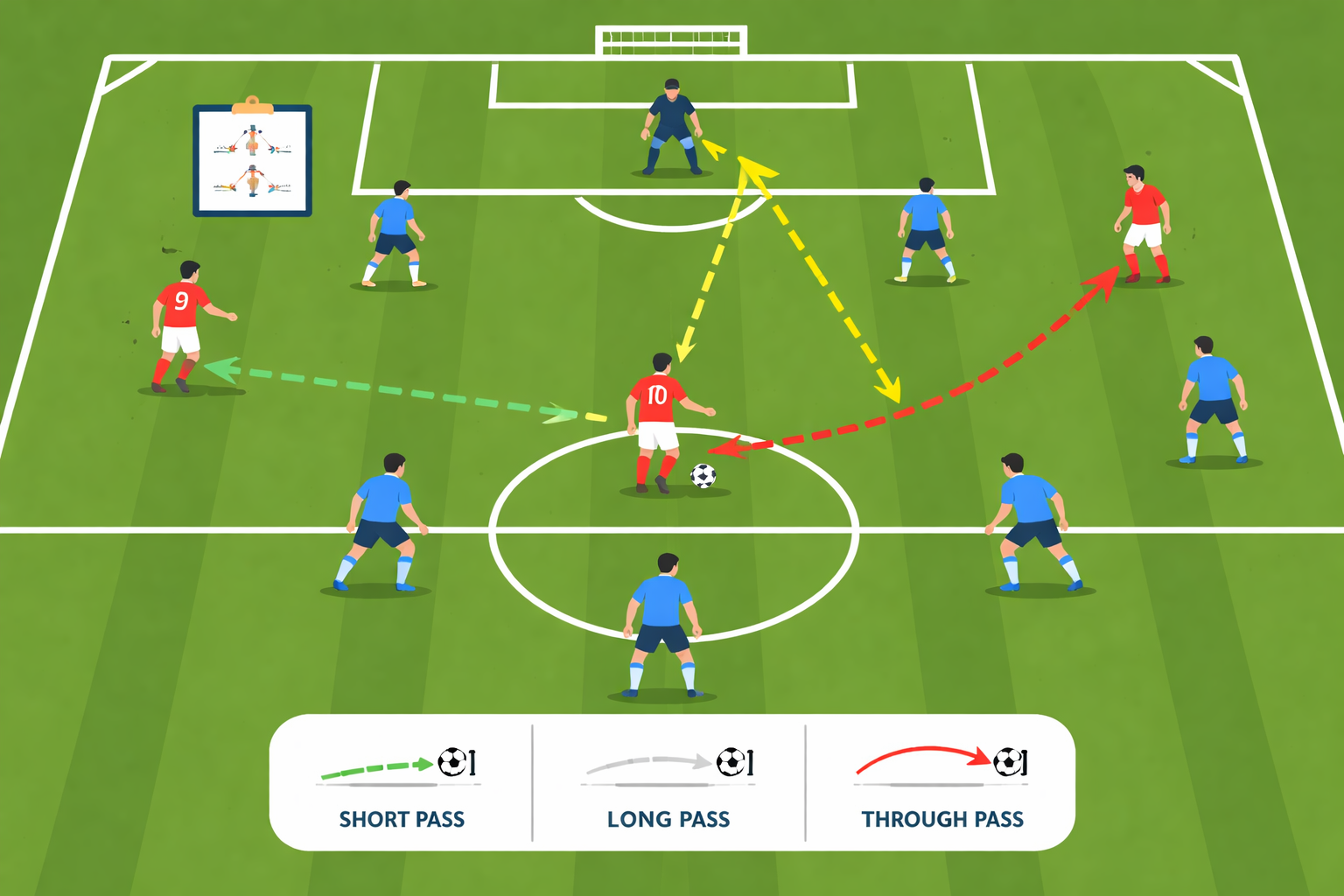
Take control of the game with our Passing Position Simulator! Experiment with different pass types and player positions to see what works best in every situation and sharpen your decision-making skills on the field.
Mastering the Art of Ball Distribution: Strategies, Techniques, and Team Awareness
Soccer is often described as a game of movement and timing, and at its core lies the art of ball distribution. A single decision can change the flow of a match, turning defensive pressure into a scoring opportunity. By learning to read the field, anticipate teammates’ positions, and understand different ball delivery techniques, players can contribute to smoother team play and more effective attacks.
Understanding the Purpose of Each Move
Effectively moving the ball across the field requires more than just technical skill. For instance, a midfielder who spots a forward breaking through the defense can deliver the ball into space, creating a quick scoring chance. In addition, recognizing open lanes and predicting opponents’ positioning allows players to maintain possession while advancing strategically. Consequently, each distribution decision contributes to the overall team structure and increases the likelihood of achieving a goal.
Exploring Different Techniques
Short Ground Delivery
One of the simplest yet most reliable methods involves keeping the ball close and moving it along the ground. For example, a defender under pressure can connect with a nearby midfielder to keep possession and reset the play. Short ground techniques are particularly effective in tight spaces because they provide control and reduce the risk of turnovers.
Through the Lines
Sending the ball into open space behind defenders can accelerate attacks dramatically. Similarly, a forward running into a well-timed through ball gains an immediate advantage over defenders, creating fast break opportunities. However, timing and awareness are critical; sending the ball too early or late can allow defenders to intercept and halt the attack.
Aerial and Lob Deliveries
Sometimes the field becomes congested, and moving the ball along the ground is no longer practical. In these cases, lifting the ball over opponents can free teammates and open new attacking angles. For example, a winger positioned near the sideline can receive a lofted ball over defenders, allowing the team to bypass the crowded midfield. Nevertheless, accurate judgment is essential, as poorly executed aerial deliveries are easy for opponents to intercept.
Reading the Field and Teammates
Success in distributing the ball depends heavily on situational awareness. Players must constantly scan the field, anticipating both teammates’ movements and opponents’ reactions. As a result, deciding whether to use a short move, through ball, or aerial delivery becomes a split-second choice influenced by pressure, spacing, and tactical goals. For instance, spotting a gap in the defense can turn a simple lateral move into a chance to advance several meters quickly. By integrating these observations into each decision, players help maintain fluidity and cohesion across the team.
Decision-Making Under Pressure
High-pressure situations test both skill and composure. When opponents close in, rushed decisions can lead to turnovers or missed opportunities. Therefore, practicing under realistic pressure conditions, such as in our Passing Position Simulator, helps players refine their judgment. For example, a midfielder learning to quickly release the ball under pressing defenders develops both accuracy and confidence, ensuring that each delivery maintains the team’s momentum.
Maximizing Team Tactics
Every technique has a role in the larger tactical framework. Short ground moves allow safe circulation and control of the midfield, through balls exploit gaps and advance quickly, and aerial deliveries overcome congested areas. In addition, combining these methods with intelligent positioning ensures that the team can collectively move forward, stretching opponents and creating scoring opportunities. For example, a coordinated sequence of short moves from the defense to the wings and finally to the striker demonstrates how varied techniques contribute to a single, shared objective: achieving a goal.
Success Rates and Risk Management
While each delivery type carries different risks, understanding their advantages improves overall efficiency. Short ground moves tend to have the highest success rates, while through and aerial deliveries are riskier but can generate higher rewards. Consequently, players must evaluate situational factors such as pressure, spacing, and teammate readiness before committing to a move. By balancing risk and reward, teams can maintain possession while progressively advancing toward the opponent’s goal.
Takeaways
Mastering ball distribution is about more than skill—it’s about awareness, anticipation, and teamwork. By understanding different techniques, reading the field effectively, and making decisions under pressure, players can orchestrate smoother attacks and elevate overall team performance. For instance, a well-timed sequence involving a short ground move, a through ball, and an aerial delivery can transform defensive pressure into a scoring opportunity, demonstrating how individual choices contribute to collective success. Interactive tools like our Passing Position Simulator provide a hands-on way to practice these scenarios, helping players refine decision-making, timing, and strategic thinking in real time.



Leave a Reply